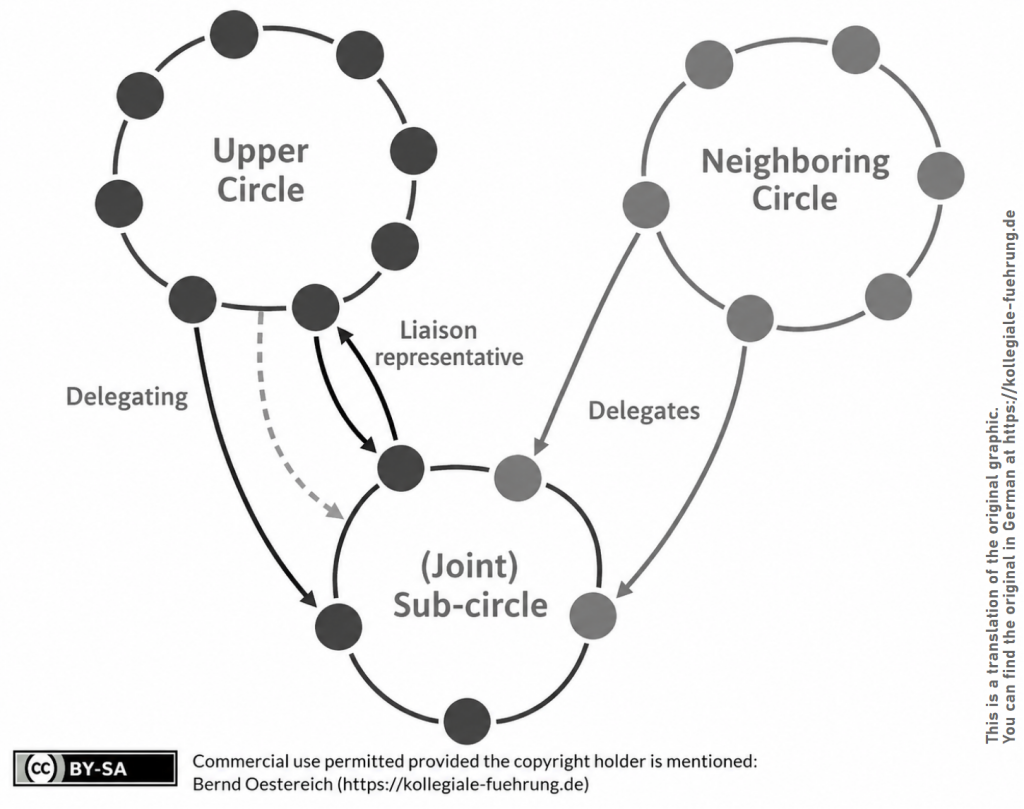
A joint sub-circle links two circles, but formally belongs to only one: formally, the sub-circle is established and overseen by just one parent circle. At the same time, both participating circles appoint delegates to ensure the flow of information and cooperation. In this way, the sub-circle remains organisationally assigned to a ‘home circle’, whilst working in the interests of both circles.
This model is particularly suitable for cross-departmental topics, projects or research tasks that require the expertise of several circles. Rather than establishing parallel structures, the participating circles pool their expertise within a single joint unit.
Within its defined area of responsibility, the sub-circle operates on a self-organised basis. The constituent parent circle merely sets the framework but does not interfere with the sub-circle’s substantive decisions.
Source: See here