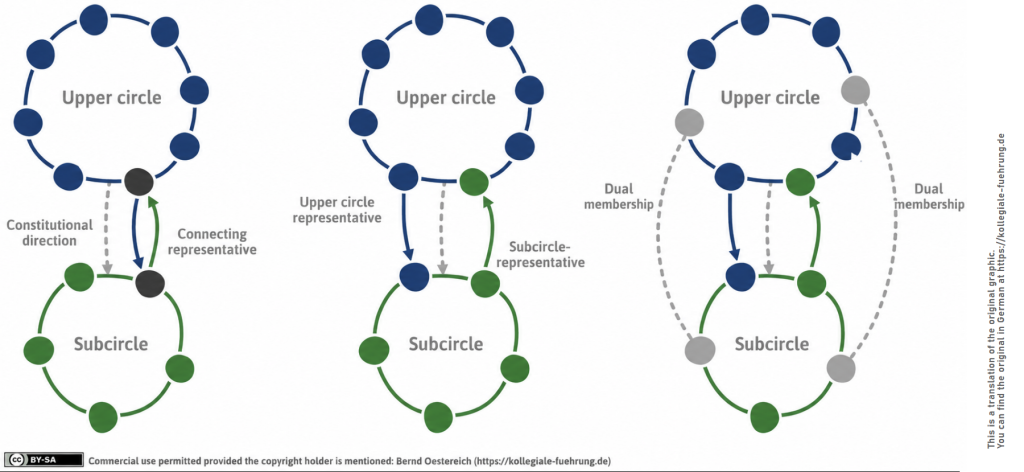
The diagram shows three ways in which a sub-circle can be linked to its parent circle.
1. Single connection: One person (a ‘single connector’) is a member of both circles and acts as the link.
2. Double connection: Two people form the interface – one representative from the parent circle and one from the sub-circle. This corresponds to the classic model of sociocracy and holacracy.
3. Multiple connection: In addition to the official liaison roles, other members are involved in both circles. This creates a closer personal interconnection.
Sub-circles are formed when an area of responsibility becomes too large or too complex and is to be delegated on a permanent basis. A sub-circle is not bound by instructions within its delegated area. Whilst the parent circle can establish or dissolve a sub-circle and define its purpose, it cannot ‘overturn’ or reverse individual decisions made by the sub-circle regarding its remit.
Depending on the situation, the link between the parent and sub-circles can be structured to be either loose or close. The aim is always to strike a good balance between efficient coordination, an adequate flow of information and the autonomy of the sub-circle.
Source: See here