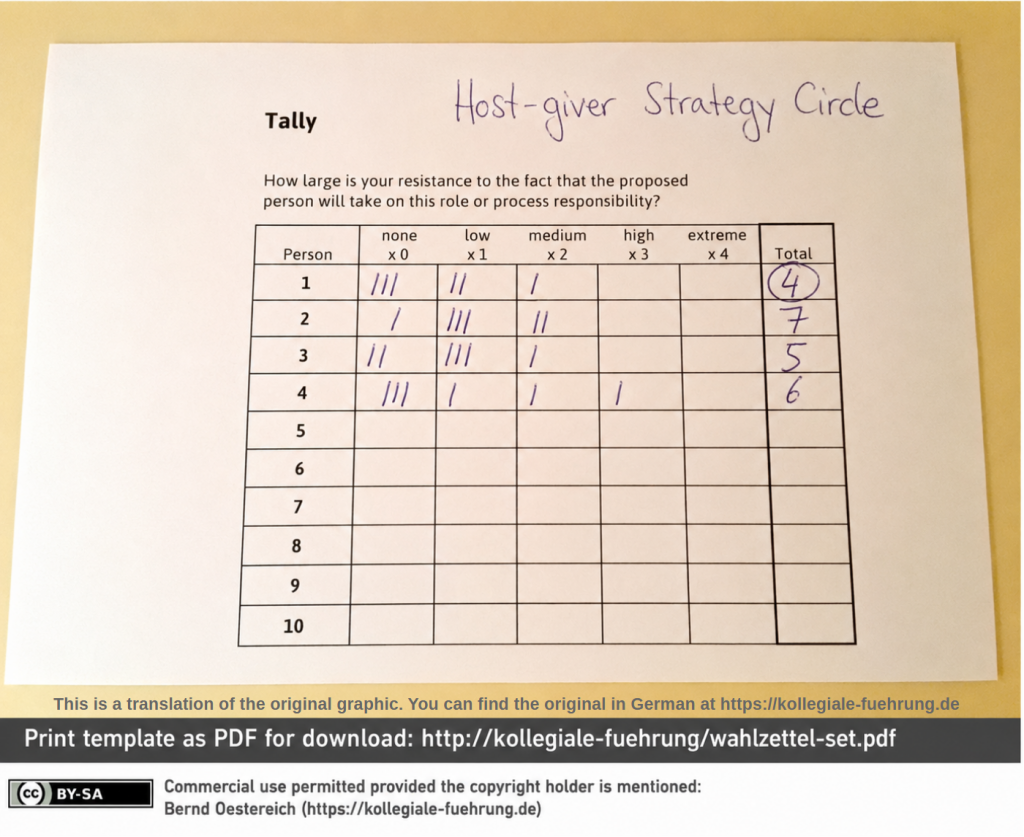
The figure ‘Example of a count’ illustrates the evaluation of a peer-based role selection process based on the principle of systemic consensus-building. All members rate the candidates anonymously using resistance scores. The scores are then added up. The person with the lowest total resistance is elected – they enjoy the highest level of acceptance within the team. For the sake of fairness, only the name of the elected person is subsequently announced; the results for the other candidates are not disclosed.
Unlike the resistance assessment used for substantive decisions, the focus here is on filling a role. A shorter rating scale is usually sufficient for this, and the results remain confidential. To ensure a successful role selection, two rounds of voting are generally held. Arguments can be exchanged between rounds before the ratings are reassessed. Only after the votes have been counted does the elected person decide whether to accept the role.
Source: See here