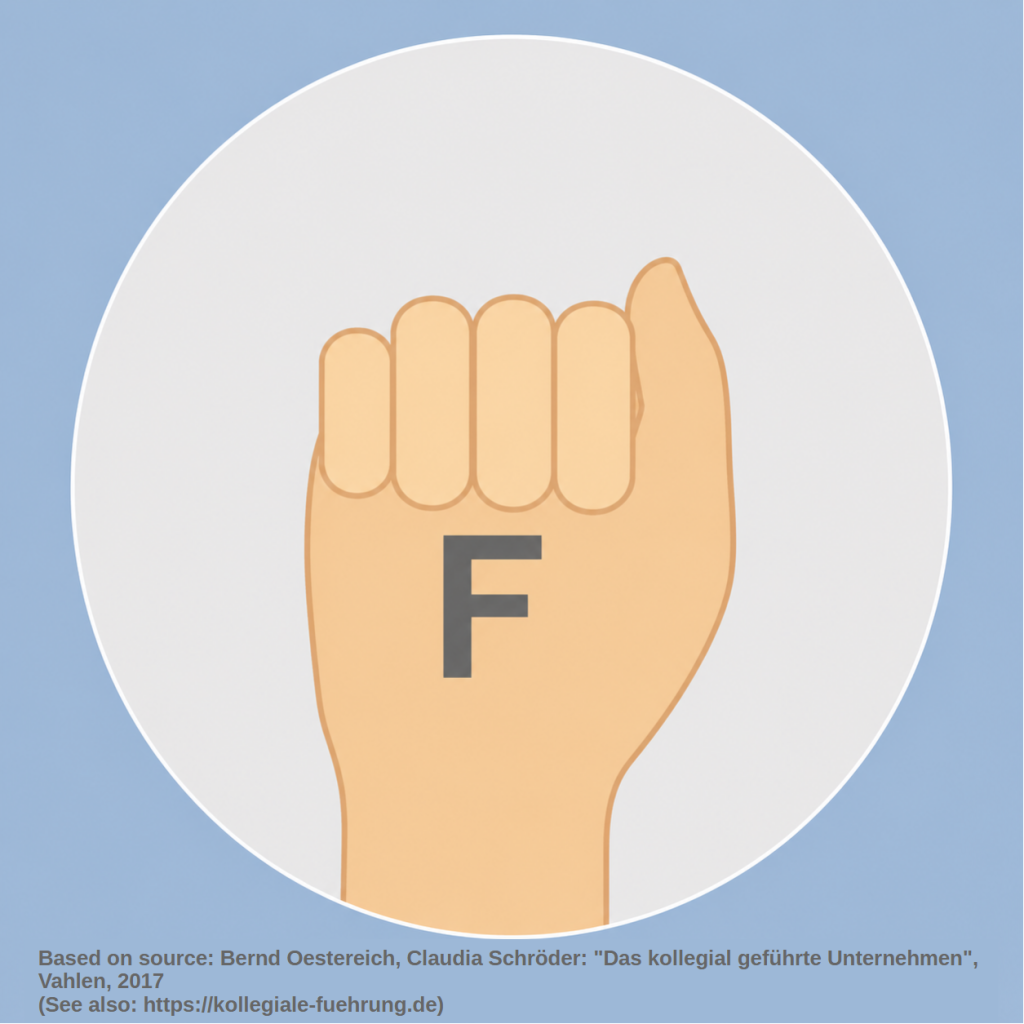
The illustration ‘Hand signal for veto’ shows an outstretched fist. It represents the sixth and strongest stage of objection integration – the emergency brake in the decision-making process.
A veto completely prevents a proposal from being accepted. However, it is only justified if a decision would seriously harm the organisation or contradict its values and purpose – not in the case of personal preferences or differences of opinion.
Anyone who exercises a veto takes on responsibility: the objection must be justified in a comprehensible manner, and the person must actively participate in the search for a solution that resolves the objection. The veto cannot be overruled by anyone. At the same time, every member bears responsibility for ensuring that the organisation is not rendered permanently incapable of acting. For this reason, every veto is documented in writing and clarified collectively so that everyone understands the essence of the objection.
Source: See here