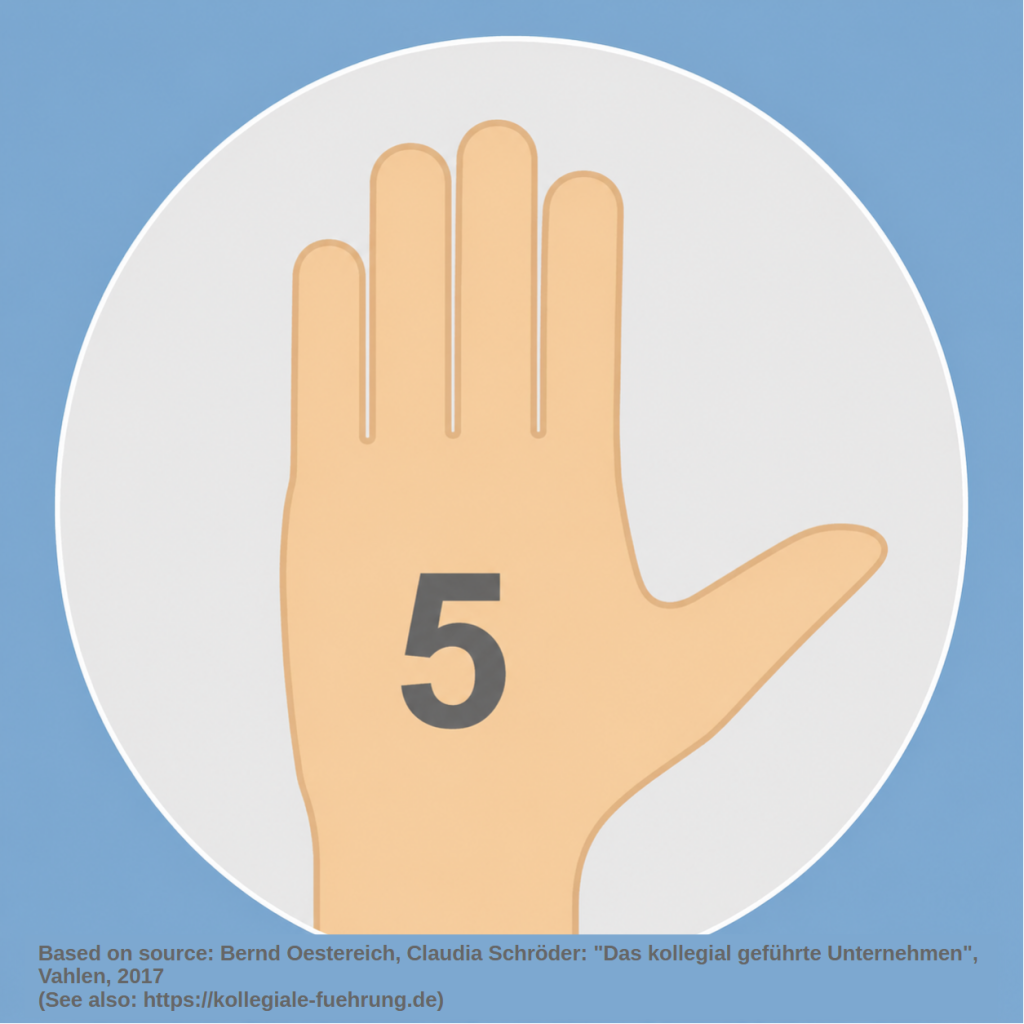
The illustration ‘Hand signal for abstention’ shows a hand with five fingers extended, representing the abstention option. The illustration depicts an attitude of benevolent indifference, in which a member clears the way for the group without taking on any substantive responsibility for the specific outcome:
• Supporting implementation whilst remaining neutral on the outcome: In contrast to the previous levels, the member here signals that the specific outcome is not important to him. At the same time, however, the vote expresses that the person nevertheless supports the implementation of the decision.
• Delegation to those with expertise: A key aspect is that, when it comes to decisions requiring highly specialised knowledge or experience, members give way to those who feel qualified to address them. In this context, abstention serves as a means of demonstrating trust in the group’s subject matter experts.
• Lack of a clear position: A show of hands is also used when a member is unable or unwilling to take a clear stance, for example because they have not fully grasped the details of the decision.
• Low relevance: The context makes it clear that the decision in question is simply not of great significance to that member’s own area of work or interests.
• Efficiency of decision-making: Abstaining prevents the process from being delayed by people who are unable or unwilling to contribute substantively. It enables the group to focus on the voices that offer a clear direction on the matter or raise well-founded objections.
Source: See here