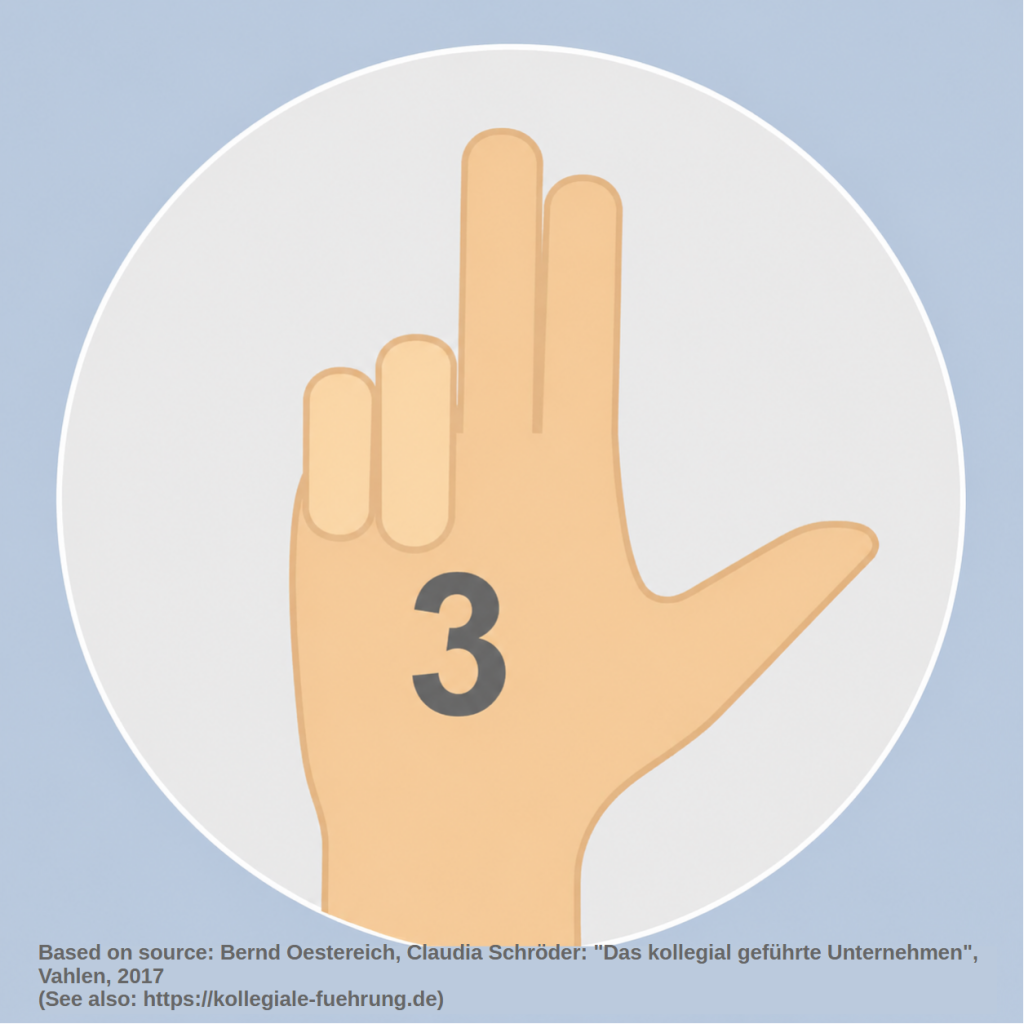
The illustration ‘Hand signal for serious reservations’ shows three outstretched fingers as a specific stage in the process of addressing objections:
• Call for change: Unlike purely informative comments, this hand signal indicates that the member is dissatisfied with the current proposal and is calling for a substantive amendment or addition.
• Conditional support: A key aspect here is ‘loyalty despite criticism’. By giving this signal, the member declares that they will nevertheless support the original proposal if the group cannot find a better or more acceptable solution. It is therefore a form of qualified participation that does not block progress.
• Obligation to put it in writing: As soon as this signal is given, the facilitator is obliged to explicitly record the objection in writing. This elevates the issue from purely verbal communication to a formal level of documentation.
• Ensuring a shared understanding: The diagram forms part of a process that requires active listening (reassurance). The facilitator must ensure that the chosen written wording accurately reflects the objector’s intention and has been understood by all other participants.
• Improving quality without a veto: The context highlights the aim of reaching a decision that is as ‘flawless’ as possible. Serious concerns serve as a catalyst for further development of the content, without having to resort to the sharp sword of the veto (the ‘emergency brake’).
Source: See here