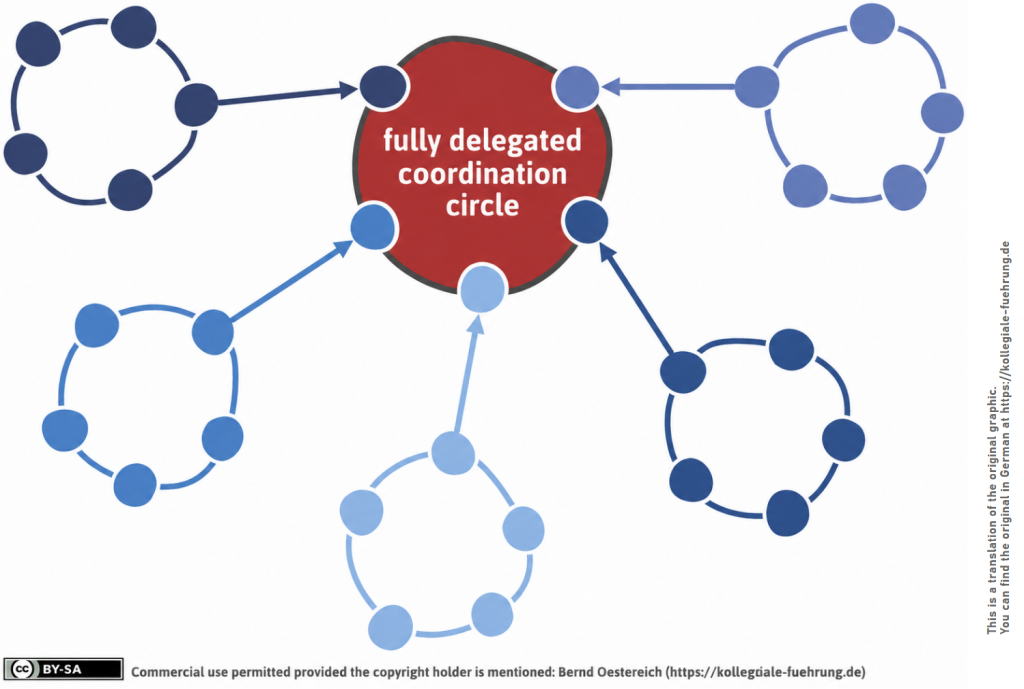
The coordination group describes a model through which several groups of equal standing can coordinate on common issues. To this end, each group concerned appoints an elected representative to a joint coordination body. The representatives liaise between the coordination group and their respective home groups, ensuring the flow of information in both directions. A key consideration here is clarifying the mandate: does the group serve merely to facilitate exchange and coordination, or does it also possess its own decision-making powers on cross-cutting issues?
This model is particularly useful where resources are shared, such as a shared IT infrastructure, a central warehouse or a joint market presence. A coordination group can also be valuable for organisation-wide knowledge exchange or for balancing differing interests between departments.
It is less suitable when groups operate largely independently and direct coordination between specialist roles is sufficient. Furthermore, if there are a very large number of groups involved, such a group can become too large and cumbersome. In these cases, a representative coordination group comprising selected representatives is often more appropriate. As with all structural decisions, the following applies: the effort involved in coordination should only be undertaken if it creates significant benefits for collaboration.
Source: See here